Technical education faces an increasingly important challenge: preparing students not only to understand concepts, but also to apply them when confronted with real-world situations. In this context, Problem-Based Learning (PBL) is a particularly valuable methodology for bringing the classroom closer to the realities of industry.
Rather than limiting learning to the explanation of theoretical content or exercises with a single correct answer, PBL presents students with a problem that they must analyze, understand, and solve. This approach promotes critical thinking, decision-making, and the ability to apply technical knowledge in contexts similar to those they will encounter in their future careers. In engineering, this connection is particularly relevant, as companies need professionals who are capable of identifying problems, analyzing their causes, and proposing effective solutions.
From the classroom to the industrial environment
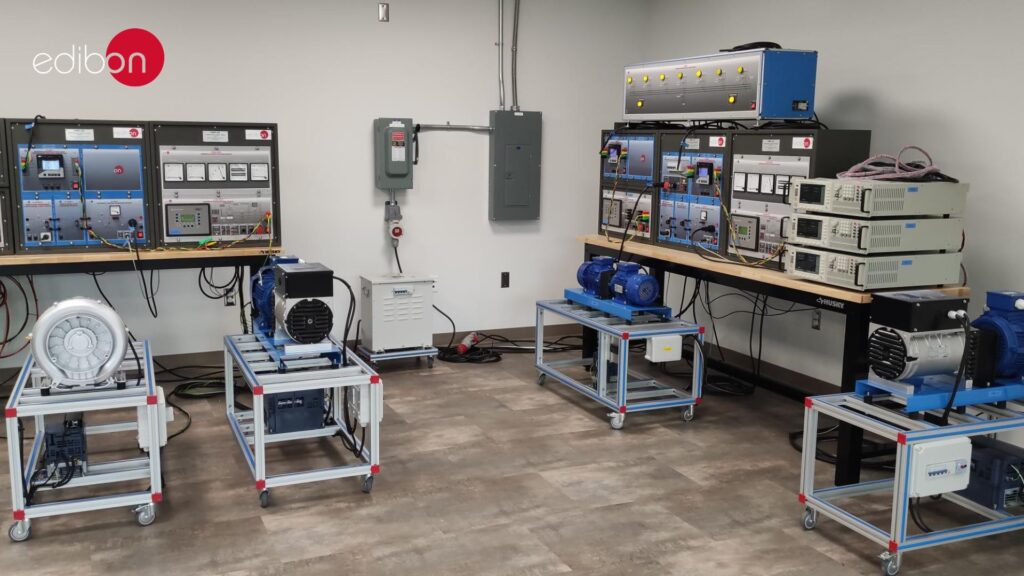
One of the main challenges in engineering education is reducing the gap between what is learned in the classroom and what happens in an industrial environment. Educational equipment can play a fundamental role in this process by allowing students to work with processes, systems, and technologies that replicate real-world situations.
The equipment developed by EDIBON is specifically designed to facilitate this transition between theory and practice. Through experimentation, students can monitor processes, analyze variables, work with control systems, and face different operating conditions.
In this way, learning is no longer limited to understanding how a system is supposed to operate and instead incorporates a fundamental question: What happens when it does not operate as expected?
This perspective introduces an additional level of realism into technical education and enables students to develop skills that are directly relevant to the professional environment.
Learning to identify and resolve failures
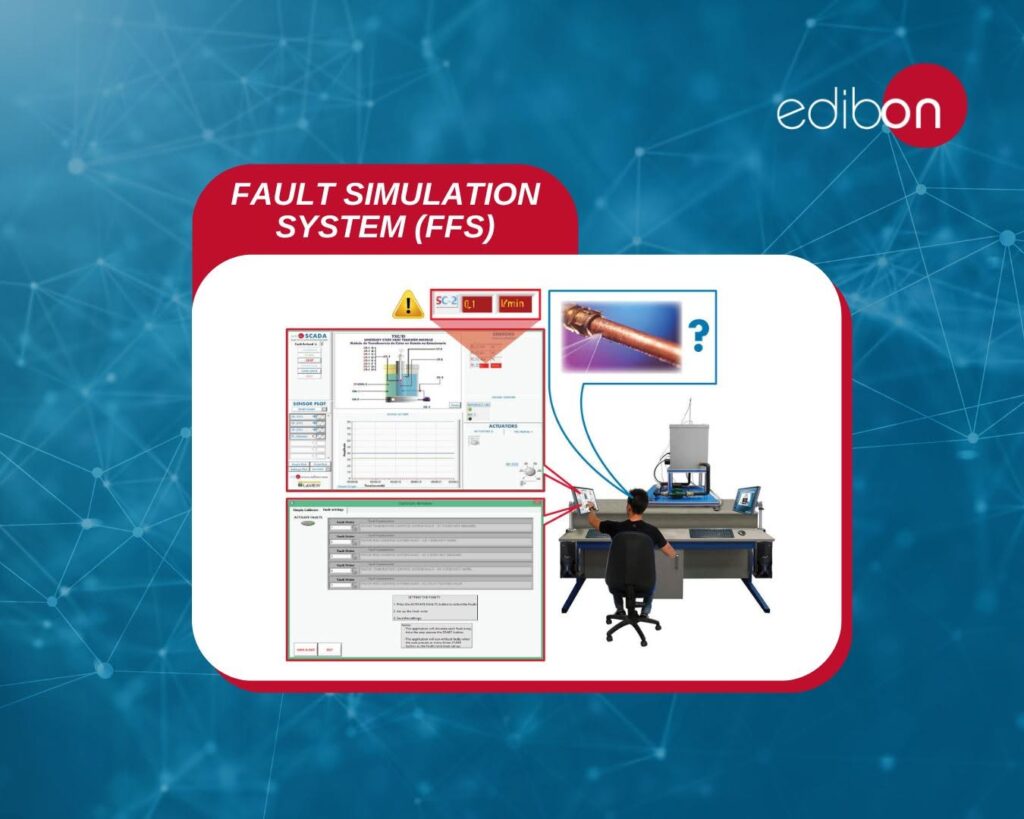
A particularly representative example is EDIBON’s Fault Simulation System (FSS). This expansion allows different failure symptoms to be safely reproduced in processes carried out with educational equipment, without causing damage to the equipment. This expansion can be integrated into any EDIBON unit.
This approach turns the equipment into a problem-based learning environment: students are presented with an anomaly and must investigate what is happening. By observing data and system behavior, they can identify potential symptoms, diagnose their causes, and propose the corresponding corrective actions.
The FSS can be used to work with different types of situations, including issues related to data acquisition, sensors, calibration, actuators, and PID control systems, among others. In addition, failures can be configured and reproduced individually, and the system is integrated with EDIBON SCADA software.
This means that a practical exercise does not have to focus solely on obtaining the correct result, but also on understanding why a process behaves in a particular way and how to restore it to proper operation.
Preparing professionals to address real-world problems
The value of Problem-Based Learning lies precisely in the fact that it makes students active participants in the learning process. Rather than simply receiving an answer, they must formulate questions, interpret information, test hypotheses, and make decisions.
When this approach is combined with educational equipment that replicates industrial technologies and situations, such as EDIBON equipment, the classroom becomes an experimental environment that is much closer to the professional world.
For engineering and technical education, bringing real-world industry problems into the classroom means preparing students not only to understand how systems work, but also to know how to respond when they encounter unexpected situations.
In this regard, systems such as EDIBON’s Fault Simulation System (FSS) demonstrate how educational technology can help create more practical, safe, and industry-oriented learning experiences that develop the skills demanded by today’s industry.
About EDIBON
EDIBON is a global leader in technical education and research equipment, driving innovation in training and scientific advancement since 1978.
We specialize in the design and manufacture of advanced educational equipment and pilot plants across 14 key areas of engineering and science.
With more than 4,500 solutions developed in-house, we combine cutting-edge technology and innovative approaches to support hands-on learning, experimentation, and process optimization.
Our commitment to quality and precision enables us to provide comprehensive service — from design and production to installation, training, and support — ensuring success and satisfaction for educational institutions, research centers, and industry professionals worldwide.
Article submitted by:
EDIBON International, S.A
Spain